
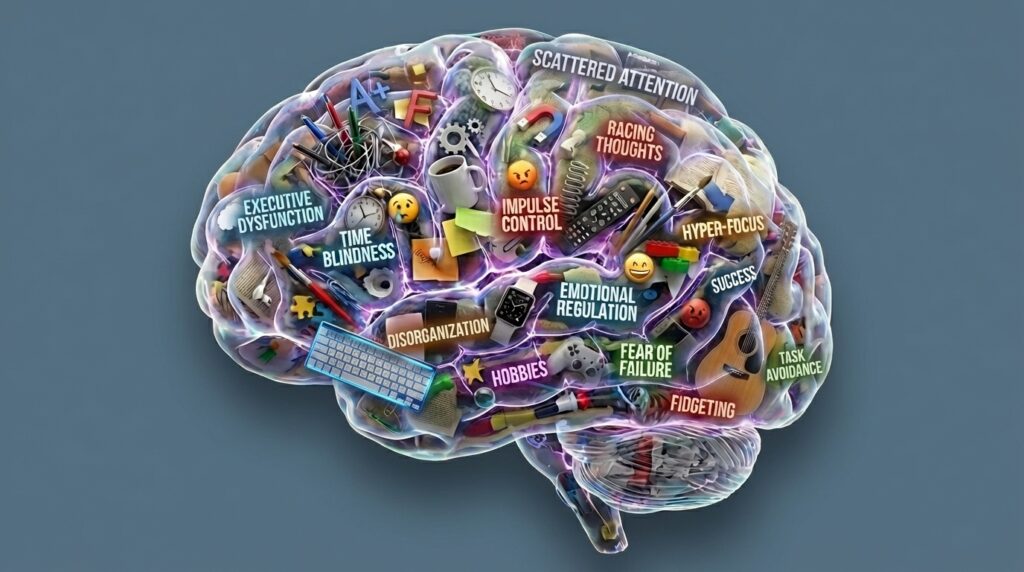
ADHD is one of the most misunderstood conditions out there, and a lot of that misunderstanding comes from the way it’s been talked about for decades. The stereotypes of the hyperactive kid bouncing off the walls in a classroom barely scratch the surface of what ADHD actually looks like in the real world. For many people, ADHD doesn’t get recognized until adulthood, sometimes not until the coping strategies that held everything together for years finally stop working. And by that point, there are usually layers of frustration, shame, and self-doubt that have built up right alongside it.
One of the most important and often most overlooked parts of managing ADHD is simply understanding what it actually is. ADHD is not a motivation problem. It’s not laziness, and it’s not a character flaw. It’s a neurodevelopmental condition rooted in real, measurable differences in brain structure and function, particularly in areas that regulate attention, executive functioning, and dopamine production. When you understand that your brain is literally wired differently, it reframes the entire conversation. It’s no longer “why can’t I just do the thing?” and more “how do I work with the brain I actually have?”
That reframing is where the real work begins. Psychoeducation is a huge piece of the process, because the more you understand about how ADHD affects your attention, memory, time perception, and impulse control, the better equipped you are to build strategies that actually fit the way your brain operates. This isn’t about forcing yourself into neurotypical systems that were never designed for you. It’s about figuring out what works for you specifically, even if it looks completely different from what works for everyone else.
And that means getting comfortable with defining “good enough” on your own terms. A lot of people with ADHD spend years measuring themselves against standards that were never realistic for them in the first place, and the result is a cycle of overcommitting, underdelivering, and beating themselves up about it. Therapy can help you step back from that cycle and start building a version of productivity and success that is actually sustainable for your life, not someone else’s.
Values work plays a central role in this. When you’re constantly in survival mode, just trying to keep your head above water, it’s easy to lose sight of what actually matters to you. Taking the time to identify your core values and align your daily life with them is one of the most powerful things you can do, not just for managing ADHD, but for building a life that feels meaningful and worth showing up for. It’s not about doing everything. It’s about doing the right things for you, and letting go of the rest without guilt.
The emotional side of ADHD doesn’t get nearly enough attention, but it’s a core feature of the condition. Guilt from constantly feeling like you’re falling behind. Anxiety from years of forgetting things, missing deadlines, or letting people down. Anger and frustration from knowing what you need to do but feeling physically unable to make yourself do it. Rejection sensitivity, mood swings that shift quickly and intensely, difficulty managing frustration. These experiences can strain relationships, erode self-esteem, and make it hard to trust yourself. They are not separate from ADHD. They are part of it, and they deserve just as much attention in treatment.
Therapy provides a space to unpack all of that while also building in the kind of accountability that actually helps. Not the “someone checking up on your homework” kind, but a consistent, nonjudgmental space to set intentions, reflect honestly on what’s working, and adjust course without shame. A therapist who understands ADHD can serve as that anchor point, helping you stay connected to your goals while being realistic about the obstacles your brain is going to throw in the way. If any of this sounds familiar, know that you are not broken and you are not alone. Head First Therapy is here to help you understand your brain, build strategies that actually work, and start living a life that feels less like surviving and more like thriving.